

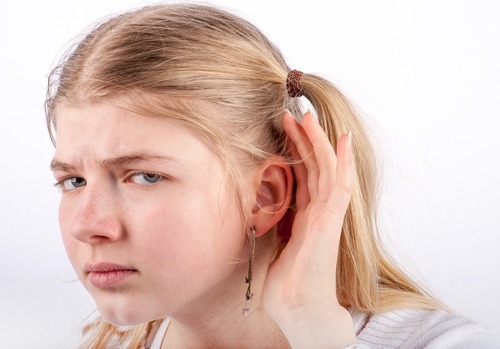
If I notice a child with auditory processing problems, the very first question I ask their parents is: do they have a history of glue ear? 9 out of 10 times the answer is a resounding yes. Glue ear is nasty – in that it is difficult to detect and can have a significant and long-lasting effect on learning. Glue ear is not obvious from the outside. Often the only sign that it is present is hearing loss. A child with glue ear will appear inattentive and unresponsive to quiet sounds. They may not turn around when you walk up behind them, and may sit close to the television.
Glue ear can be confused with ear infections, as both are common in young children. Glue ear is characterised by inflammation (swelling) and a build-up of fluid in the ear. Risk factors include allergies, second-hand smoke and even bottle feeding (glue ear is more common in bottle-fed babies who drink on their back, which can cause milk to enter the middle ear and make it inflamed). Young children are the most susceptible to glue ear because their Eustachian tubes (the passageway between the middle ear and the throat) are short and narrow, and so get clogged easily. This does not sound particularly harmful, especially as many cases of glue ear clear up by themselves, however glue ear can have a very detrimental effect on learning and development if it is not detected early on. Fluid in the ear weakens the vibration of the small bones in the ear that transmit sound, leading to muffled hearing. This hearing loss can significantly slow a child’s speech and language development, and impact their behaviour. Mostly importantly, it is very uncomfortable and irritating for children to live with.
There is an operation available, in which grommets (ventilation tubes) are inserted in a child’s eardrums. These ventilation tubes are small devices inserted into the ear via a cut in the eardrum. They ventilate (let air into) the middle ear, so that it stops producing the fluid which collects there, causing deafness or ‘glue ear.’ They may also be recommended for recurrent middle ear infections. During my stay at St Vincent’s Hospital in Sydney (for a tonsillectomy) I was surrounded by children who had been admitted for the grommets operation. As tonsillectomies and surgery for grommets are generally children’s operations I felt like a giant! After chatting to some of the mothers, I believe that the operation for grommets is a worthwhile one. It is not without its complications – one little boy was having his second surgery for grommets, as a small hole had developed – but as his mother confessed: ‘I only wish we’d done it sooner. It has made such a difference for us.’
Glue ear children suffer greatly in meeting expectations of alertness and responsiveness in school. Consider this example:
Over the din of a busy classroom, the teacher, Miss Mitchell, asks:
‘Thomas, would you come to my desk, please?’
Thomas continues his project, seemingly ignoring his teacher.
Miss Mitchell walks over and scolds Thomas for failing to follow her instructions.
Thomas feels ashamed and confused. Why is he being told off?
A high-pitched female voice is particularly difficult for Thomas to pick up on. If he does not hear Miss Mitchell’s instruction, he will not follow it. His teacher may attribute Thomas’ inability to follow directions as defiance, inability to focus or lack of intelligence – when the reason is hearing difficulties.
Glue ear is so frustrating for children that it can be a cause of challenging behaviour and social dysfunction. It brings to my mind the analogy of a ‘bear with a sore paw.’ A child with glue ear may be sore and irritable – and may act out.
